
Vaibhav Sooryavanshi Out of 4th T20I: It Isn't a 'Drop', It's a Reversion to First Choice
ऑकलैंड में खेले गए चौथे भारत-न्यूजीलैंड T20I में वैभव सूर्यवंशी को 'ड्रॉप' नहीं किया गया था — वे पहली पसंद के विकेटकीपर-बल्लेबाज़ ईशान किशन के फिट होकर लौटने के कारण बाहर हुए। किशन लो-ग्रेड राइट एडक्टर स्ट्रेन से वापसी कर रहे थे और उन्हें नंबर तीन पर उतारा गया; सूर्यवंशी ने दूसरा और तीसरा T20I चोट-कवर के रूप में खेला था। दूसरा बदलाव भुवनेश्वर कुमार की जगह मयंक यादव की वापसी था, जिसका कारण (आराम, रोटेशन या फ़ॉर्म) स्पष्ट रूप से नहीं बताया गया। भारत ने टॉस जीतकर पहले गेंदबाजी चुनी, और सीरीज 3-0 से पहले ही तय हो चुकी थी, इसलिए यह मैच 'डेड रबर' था। ध्यान देने योग्य बात यह है कि रिपोर्ट में किसी खिलाड़ी का कोई प्रदर्शन-आंकड़ा नहीं है, और कप्तानी व सीरीज की स्थिति जैसे तथ्य एक ही स्रोत पर आधारित हैं — इन्हें आधिकारिक रिकॉर्ड से सत्यापित करना चाहिए। सबसे बड़ी अनदेखी खबर सूर्यवंशी का बाहर होना नहीं, बल्कि न्यूजीलैंड का घर में 3-0 से पिछड़ना है।
Auckland. India made two changes for the fourth T20I against New Zealand — Ishan Kishan in for Vaibhav Sooryavanshi, and Mayank Yadav in for Bhuvneshwar Kumar. The captain announced the changes at the toss and elected to bowl first. The series is already decided, with India leading 3-0; in that sense this is a dead rubber.
But the way the news was framed has become the real talking point. The headline and the body of the report use the word "dropped". The facts do not support that language.
At a glance
- Venue and date: Auckland, 30 October — New Zealand vs India, fourth T20I of the series.
- Toss: India won and elected to bowl first.
- Changes: Ishan Kishan in, Vaibhav Sooryavanshi out; Mayank Yadav in, Bhuvneshwar Kumar out.
- Series state: India lead 3-0; the series is already secured.
- Sooryavanshi's role: Played the second and third T20Is as injury cover; out as soon as the first-choice player was fit.
- Kishan's status: Returning from a low-grade right adductor strain; batting at No. 3.
Two changes, one clear message
On the surface this is a routine team-selection note. But read together, the two changes form a coherent picture: the Indian team management is reverting to its first-choice XI. Ishan Kishan is a wicketkeeper-batter who, when fit, ranks ahead of Sooryavanshi — and that preference is now on the public record. On the other side, replacing an experienced new-ball seamer like Bhuvneshwar Kumar with an express quick like Mayank Yadav shows that the team has at least two distinct bowling plans within a single series.
This is not a selection crisis. It is selection flexibility. And that is the least-discussed, most solid conclusion in the whole story.
'Dropped' or 'making way'?
This is the analytical spine of the report: Sooryavanshi was not omitted on form. He was omitted because the player he was covering for returned to fitness.
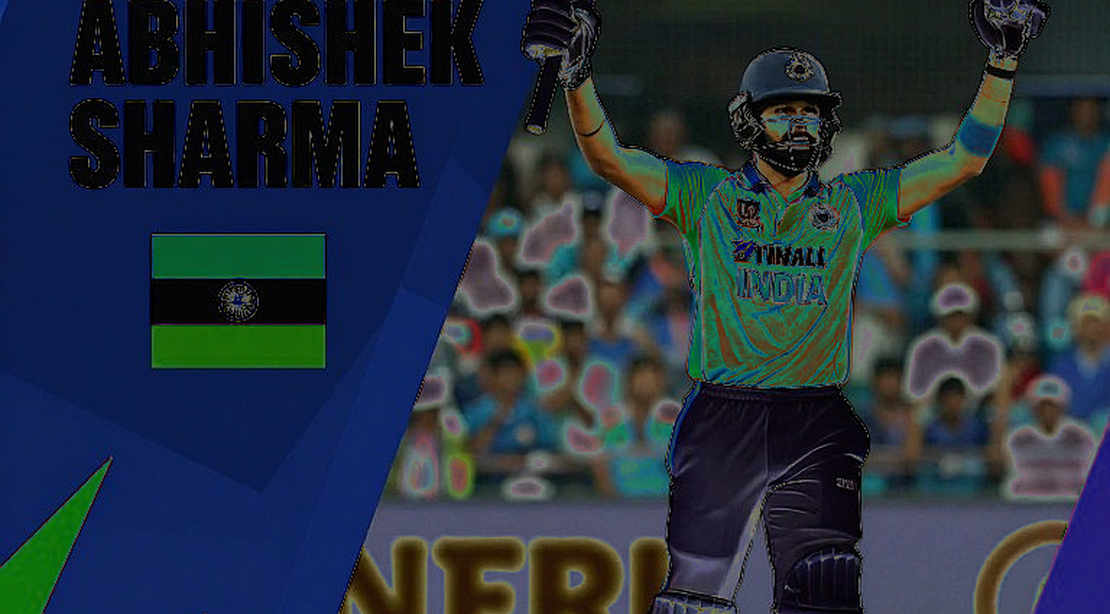
The distinction matters because the two situations mean entirely different things. Dropping a player on form is a question about his performance. Losing a place because an injury-cover assignment has ended is not a comment on performance at all — it is normal selection mechanics.
The sequence of facts is clear: Kishan was injured, Sooryavanshi got the second and third T20Is, Kishan regained fitness, and Sooryavanshi returned to the bench. This is a reversion, not a demotion. A report that calls this a "drop" collides with its own facts.
There is a subtler point too: the word "drop" instantly plants a question in the reader's mind — why was he dropped? — and the material assembled to answer that question is often inference rather than fact. Journalistically, this is a traffic-value decision, not a sporting statement.
Ishan Kishan: a fitness-dependent pick and its risk
Kishan's return cannot simply be filed as good news. His injury — a low-grade right adductor strain — is a soft-tissue injury, and it is especially sensitive for a wicketkeeper-batter. The reason is straightforward: keeping involves repeated squatting, diving and sudden changes of direction; batting also loads the legs abruptly. The adductor therefore absorbs three kinds of load at once — batting, squatting and diving.
The recurrence risk is real. And the question arises: in a match whose result has no bearing on the series, how wise is it to immediately hand a high-value player a full workload?
Two readings are possible. First, the team management wants Kishan to regain match rhythm before the next assignment, and a dead rubber is the ideal low-pressure setting for that. Second, it is a risk-management failure, because for a player returning from a soft-tissue injury, "fit" and "ready for match load" are not the same thing.
The available report does not say whether any workload cap was applied to Kishan, cites no medical clearance, and describes no return-to-play protocol. That is a significant information gap, because explicit load control on return from soft-tissue injury is standard practice in modern sports medicine.
Mayank Yadav's recall and the unresolved Bhuvneshwar question
The second change is drawing less attention, though it is equally interesting analytically. Dropping an experienced swing bowler like Bhuvneshwar Kumar for Mayank Yadav has two possible meanings, and they point in different directions.
First: workload management. Resting a veteran seamer in a dead rubber is classic rotation, especially when India have won the toss and chosen to bowl first. Second: a structural preference — the team management is going pace-first for this venue and this opposition. At a ground like Auckland, where the straight boundary is traditionally short and the ball travels, an express quick can be a more reliable route to wickets than to containment.
But honesty is required here: the available report carries no pitch report, no weather information, and no stated reason for Bhuvneshwar's absence. That is the biggest omission. Whether the cause was rest, rotation or form, the reader cannot know. Omitting an experienced player without explanation is weak selection communication.
There is a separate risk dimension for Mayank Yadav. An express quick's value rests on sustained pace, and such bowlers generally carry elevated soft-tissue and stress-injury risk. Even a low-stakes match demands full-intensity spells. His spell length and speeds therefore deserve tracking.
The toss decision: bowling first is a structural choice
The captain won the toss and chose to bowl. This should not be dismissed as a simple tactical call. With the series already won, bowling first makes sense for two reasons.
First, chasing protects a young and rotated attack from scoreboard pressure. Second, a returning fast bowler (Mayank Yadav) gets a defined, pressure-light spell rather than defending a total. This is planned, not reactive.
A weather note is also relevant. Late October is early spring in New Zealand — cool temperatures, elevated rain risk, and generally less dew than the March/April window usually associated with Eden Park night games. But this is inference from the calendar, not from the report, which contains no weather data. Treat it as a low-confidence conclusion.
What 3-0 means: an audition, not a contest
The series is 3-0. The direct implication is that the fourth T20I's competitive meaning had expired before the first ball. Such a match should be read as a squad audition, not as a contest of consequence.
That means every selection decision in it should be viewed through two lenses: workload/rotation, and pecking-order signalling. Reading them as performance judgments would be a mistake.
A caveat is necessary. The report claims India "dominated the hosts throughout the series". That is author opinion with no supporting data — no victory margins, no run rates, no individual returns. A 3-0 scoreline is consistent with dominance, but also with three close finishes. The claim of dominance is therefore plausible but unquantified.
The biggest under-reported story: New Zealand's 3-0 deficit at home
If one fact in this whole report demands analysis, it is not Sooryavanshi's omission — it is that New Zealand are 3-0 down at home.
Home advantage in T20 cricket is smaller than in Test cricket, but far from zero. Pitch familiarity, boundary dimensions, crowd support, and travel fatigue for the visitor all combine into a real edge. A 3-0 home deficit is a genuine performance signal about New Zealand's current T20 side. It may point to selection, personnel, or a rebuild.
The report does not ask the question. It merely says New Zealand "will aim to bounce back" — an empty sentence. With the series lost, the real question is whether New Zealand use the remaining matches to test personnel or to salvage pride. The report does not ask it, and there is no information available to answer it.
Evidence of bench strength, and the silence on spin
One solid point about India's structure emerges from this episode: when the first-choice keeper is injured, the team can plug in a capped replacement, and when he is fit, reverse the change without structural disruption. That is a hallmark of bench strength, not of a selection dilemma.
Batting depth can be gauged from the same fact: Abhishek Sharma and Sanju Samson open, Kishan bats at No. 3 — and an international-standard backup top-order batter sits outside the XI. In bowling, too, at least two distinct plans exist, since a veteran swing seamer can be swapped for an express quick within a single series.
But there is a large gap: the report contains not a single piece of information about spin bowling. That is a serious omission. In a series being won 3-0, middle-over spin control is usually decisive. Its complete absence suggests the source is a selection-news wire piece, not an analytical report.
There is also an internal inconsistency in the report's own language. Kishan is described in one place as an experienced option at the top of the batting order, and in the very next sentence placed at No. 3. In T20 cricket, "top of the order" and "No. 3" are not the same role. It is a small point, but it says a lot about the source's analytical rigour.
Vaibhav Sooryavanshi: a two-match sample settles nothing
Sooryavanshi is a very young player — that comes from media reports, not from the source material here, so it should be marked as pending verification. But whatever his age, one point is statistically certain: two T20Is constitute a meaningless sample for any assessment of technique or ceiling, in either direction.
There is no basis for praise, and none for doubt. Drawing any conclusion from this event about his batting technique, form or future would be unsupported.
The conclusion that does emerge concerns the selection system: Sooryavanshi's current position is backup top-order batter, and this is now explicit. Two matches of opportunity followed by immediate reversion is the classic signature of a placeholder role.
Therein lies a real and under-discussed risk: repeatedly selecting a young reserve and then discarding him without a communicated plan is a known pathway-management failure mode. The report gives no indication whether the team management has laid out a clear route for him.
Media framing: a non-event turned into an explainer
The story produces a curious contradiction. The report answers its own headline in a single clause — he made way for a fit first-choice player. Everything else is padding.
In other words, the story's temperature far exceeds its information content. A headline asking "why didn't he play?" implies a mystery or a controversy, while the facts describe a routine reversion. This is a textbook framing-driven sentiment deviation.
A large part of the reason is that in Indian cricket media, a young player's hype cycle runs ahead of the selectors' hierarchy. When the two collide, even an ordinary selection gets reported as a controversy. Historically, the fulfilment rate of "next big thing" labels has been low.
And there is another signal that helps decode all of this: the report's closing section is filled with promotional content, directing readers to five platforms. That indicates an engagement-first content operation, not an analysis-driven one. The dramatic headline language should be discounted accordingly.
Risk assessment
The biggest real risk is medical, not competitive. Playing a wicketkeeper returning from a soft-tissue injury in a match with no bearing on the series is the only decision here with genuine downside. If Kishan breaks down again during or after this match, the call will face heavy retrospective criticism — a classic hindsight-risk scenario.
The second risk is Mayank Yadav's workload. Even in a low-stakes match, a fast bowler is expected to bowl full-intensity spells.
The third risk is narrative, not sporting. The gap between the "dropped" framing and the fact of "making way for a fit first choice" is the entire basis of fan backlash. Correcting the framing removes most of it. Interestingly, this is the highest-probability risk item in the whole list — and it is a media-environment risk, not a cricket risk.
Lower risk — a young player's confidence. Two matches of opportunity followed by an unexplained reversion can affect self-belief.
What is simply absent: no betting signal, no integrity red flag, no rule controversy. The toss was conducted normally and the changes were declared at it — fully rules-compliant procedure. Those looking for a scandal are looking for nothing.
What to track next
- Kishan's fitness: how he holds up through the rest of the series, and whether any rest or restriction appears. Any setback would force Sooryavanshi's return — and would raise the question of why Kishan was played in a dead rubber.
- Sooryavanshi's selection: whether he plays the fifth T20I or is omitted for a third straight match. Playing = rotation confirmed; omission = the hierarchy has hardened.
- Mayank Yadav's spell length and pace: short spells or reduced pace would signal managed workload.
- New Zealand's XI: wholesale changes = rebuild mode; unchanged XI = performance crisis. This would reframe the 3-0 scoreline from an Indian triumph to a New Zealand problem.
- Official word on Bhuvneshwar: whether the post-match press conference uses explicit "rest" or "managed" language. That would convert an ambiguous omission into a clear rotation policy.
- Media framing of the next non-selection: "dropped" versus "rested/rotated" — repetition of the former would indicate a sustained pressure campaign on the selection panel.
Verification note (important for readers)
Some facts in this report rest on a single source and are not independently cross-validated. In particular, the captaincy attribution and the series state should be treated as medium-confidence until checked against ICC/BCCI official records. Similarly, the points about the Auckland pitch, weather and dew are inferences drawn from general cricket knowledge, not from the source.
Most importantly: this report contains no performance data for any player — no averages, no strike rates, no economy rates. Where this analysis appears confident, it is confident about selection logic and media framing — not about player quality, team strength or match outcomes. Those are marked as insufficient information.
Glossary
- T20I: A 20-over international match — the shortest of the three full international formats.
- Playing XI: The eleven players named for a specific match; changes between matches are declared at the toss.
- Dead rubber: A match whose result has no bearing on the series outcome — typically used for rotation and experimentation.
- Adductor strain: A muscle injury in the inner-thigh/groin group; a soft-tissue injury with meaningful recurrence risk, especially for wicketkeepers.
- Wicketkeeper-batter: A specialist who both keeps wicket and bats, typically in the top order — a scarce, high-value dual role.
- No. 3: One of the most important batting positions; usually the anchor or the most technically complete stroke-maker.
- Workload management: The planned control of a player's bowling/batting/keeping volume to reduce injury risk.
- Pecking order: The selectors' internal ranking of players for a given role — the key to reading this story correctly.
Disclaimer
This analysis is based on public information and available news reports. It is provided for sports-information reference only and does not constitute any form of betting advice. Sporting outcomes are highly uncertain; please treat the analytical conclusions rationally.