
110 in Lahore: Pakistan bowled out in 25.3 overs, Sri Lanka into the final in 18.1 — and the 89-run tenth-wicket stand that hid the problem
**मुख्य उत्तर** लाहौर में खेले गए त्रिकोणीय वनडे में पाकिस्तान 110 रन पर ऑलआउट हो गया और श्रीलंका ने 18.1 ओवर में 114/2 बनाकर आठ विकेट से जीत दर्ज की। इस नतीजे से इंग्लैंड बाहर हुआ और फाइनल पाकिस्तान बनाम श्रीलंका तय हुआ। **मुख्य तथ्य** - पाकिस्तान: 110 ऑलआउट, 25.3 ओवर; 300 में से केवल 153 गेंदें इस्तेमाल हुईं। - दिलशान मदुशंका: 5/34 — पारी के 50 प्रतिशत विकेट, करियर का सर्वश्रेष्ठ प्रदर्शन। - बाबर आज़म का 29 रन पाकिस्तान का सर्वोच्च स्कोर रहा। - श्रीलंका: 114/2, 18.1 ओवर, रन रेट 6.28 बनाम पाकिस्तान 4.31। - ऑलआउट पारी पर पूरे 50 ओवर गिने जाते हैं: NRR योगदान 2.20 बनाम 6.28। **स्रोत** स्टेज-1 मैच रिपोर्ट विश्लेषण; मूल प्रकाशक और प्रकाशन तिथि अपुष्ट। 199 गेंद शेष बनाम 18.1 ओवर के आंतरिक अंतर के कारण सभी आंकड़े सत्यापन लंबित हैं। **संबंधित प्रश्न-उत्तर** प्रश्न: इस मैच से पाकिस्तान का नेट रन रेट कितना प्रभावित हुआ? उत्तर: ऑलआउट पारी पर पूरे 50 ओवर गिनने के नियम से पाकिस्तान का योगदान लगभग 2.20 रन प्रति ओवर रहा जबकि श्रीलंका का 6.28, यानी करीब −4.08 का अंतर। प्रश्न: क्या बाबर आज़म के लगातार फॉर्म में न रहने का दावा आंकड़ों से समर्थित है? उत्तर: रिपोर्ट में न स्कोरों की श्रृंखला दी गई है, न अवधि, न प्रारूप-विभाजन, इसलिए यह दावा अपुष्ट है और वही पारी में टीम का सर्वोच्च स्कोर भी उन्हीं का था। प्रश्न: फाइनल में सबसे बड़ा अनिश्चित कारक क्या है? उत्तर: श्रीलंका की मध्यक्रम बल्लेबाज़ी कभी परखी नहीं गई, क्योंकि 114 का लक्ष्य पांचवें से सातवें क्रम तक पहुंचा ही नहीं।
25.3 overs. Pakistan 110 all out on the Lahore board. In a fifty-over match, 24.3 overs went unused — 147 deliveries never bowled. Since 2026, when I called the inaugural Indian Women's League in Cuttack from a plastic chair beside the touchline, I have kept one habit: a handwritten sheet logging the balls each innings left behind. That number never appears on an official scorecard, and it is the clearest tell of who abandoned an innings. Pakistan used 153 of their 300 balls. A wicket fell every 15.3 deliveries. And this is the same side that had rescued itself in the previous match with an 89-run tenth-wicket record stand. In Lahore, nobody came to the rescue.
This is a tri-nation ODI series, Pakistan hosting, and this was a league-phase fixture. The consequence was that Pakistan's defeat eliminated England and set up a Pakistan–Sri Lanka final, reported for the following Sunday. The arithmetic of England's exit is nowhere in the report — no points table, no net run rate. That matters, because in a tri-series the second finalist is routinely decided by exactly the number the report leaves out.
Start with the document that predates this match. In the previous game Pakistan added 89 for the tenth wicket, a record stand. On a scorecard that reads as heroism. On my sheet it reads as something else: the top order had already failed. A tenth-wicket partnership is not a team's strength; it is a team's repair job. That day the repair held and produced a win, so nobody asked about the fault underneath. In Lahore the same structure reappeared, except this time the repair never came to the crease.
Pakistan were 23/2 in the powerplay, both openers gone. ODIs use two new balls, one from each end, so the first ten to fifteen overs are the phase of maximum movement. It is also the phase in which a left-arm seamer does the most damage. The geometry is simple: the ball angles away from the batter, slips and leg-before come into play, and a right-handed top order must make a decision on almost every delivery — play or leave. A score of 23/2 means Pakistan lost that decision repeatedly.
Dilshan Madushanka took 5/34. That is half the ten wickets in an innings that lasted barely half its allotted overs. A share that large usually indicates one bowler locating a single repeatable weakness, not an attack collectively overwhelming a batting side. Sahan Arachchige's 2/24 supports that reading — one spearhead and support. Here I have to stop and record what the report does not supply: Madushanka's overs bowled are not given. His economy rate and bowling strike rate, the two most basic ODI measures, cannot be computed. Judgement on what cannot be computed stays suspended.
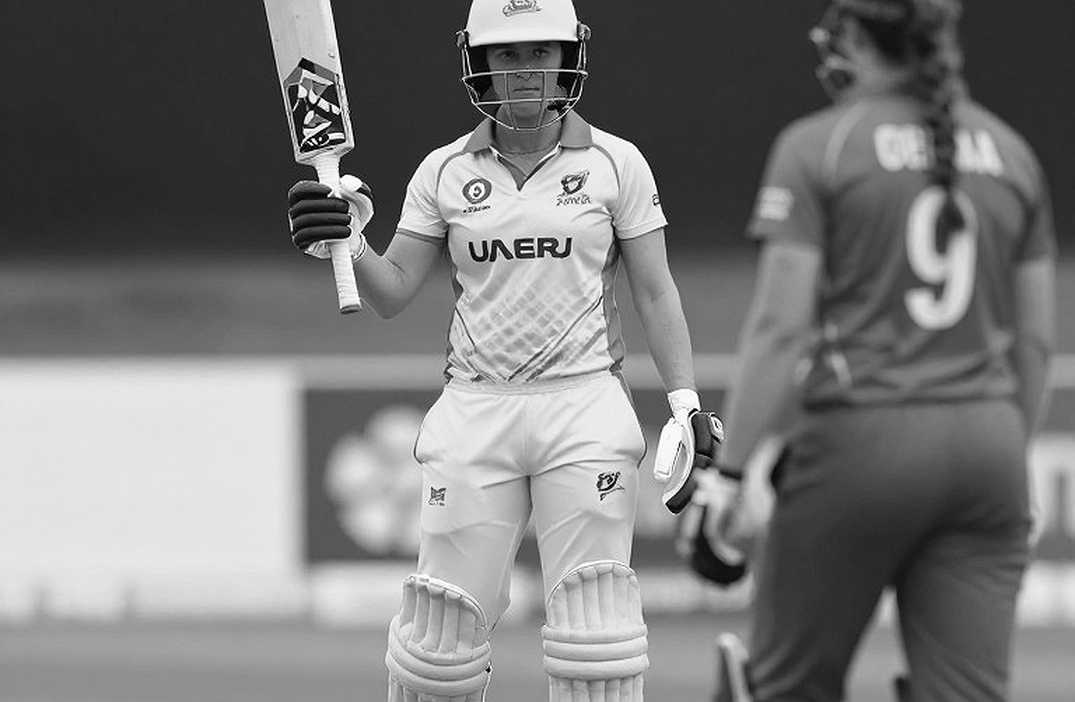
Pakistan slid to 61/5 in the middle overs. One thing worth registering: this match never reached the phases in which ODIs are normally decided — spin control through the middle, acceleration in the last ten. An innings finishing in 25.3 overs means the death overs never arrived. When a side uses 49 percent of its resource, the cause of defeat is batting surrender, not bowling quality. Babar Azam made 29 and it was the highest score of the innings. A top score of 29 in a total of 110 is a statement in itself: even the batter holding the innings together was scoring below the rate his role demanded.
The least written-about and most consequential passage is the net run rate. Under international playing conditions, a side bowled out before its full quota has the full fifty overs charged against it. Pakistan's contribution to this match therefore computes at 110/50 = 2.20 runs per over, against Sri Lanka's 114/18.1 ≈ 6.28. A single-match swing of roughly −4.08 runs per over. That is damage far heavier than the scoreline implies, and the report does not contain a word of it. Read plainly, 110 against 114/2 does not look like a rout; on the NRR sheet it is a canyon.
Sri Lanka finished the job in 18.1 overs. A target of 114, a rate of 6.28, and Kamindu Mendis unbeaten on 62 from 42 balls — a strike rate near 147.6. An ODI par strike rate sits around 85 to 95; 147.6 is T20 pace. That is a technical signal that Kamindu chose intent over accumulation. Pavan Ratnayake finished 23 not out. The essential caveat belongs here: 199 balls were in hand, so risk carried no cost. Such an innings does not establish that the same batter sustains that tempo once the scoreboard presses. A strike rate of 147 in this setting is a technical achievement; repeating it under pressure would be a test of technique and temperament that has not yet been set.
Sri Lanka's middle order went entirely unexamined. Both dismissed batters were top-order — Avishka Fernando and Kusal Mendis — and the target was only 114. Positions five to seven were never needed. That is the final's largest hidden variable. Should Pakistan bat 45 overs and post 250-plus, Sri Lanka's middle order will face its first genuine demand of the tournament, with no current evidence behind it at all.
Pakistan's selection deserves a look of its own. The XI contained names such as Arafat Minhas, who took 1/23, and an opener listed as Maaz Sadaqat, spelling unconfirmed, alongside seniors Babar Azam and Fakhar Zaman. If this genuinely was a rotated XI, then 110 is a weaker diagnostic of Pakistan's first-choice batting than it first appears. But that 'if' is not strong — no team sheet or squad structure is provided. I keep it inside the boundary of inference.
Now the angle that inverts the whole story. What is being described as a commanding Sri Lankan win was, on the batting side, a forfeit. Eight wickets, 191 balls spare — those numbers do not measure the strength of a side that used barely a third of its chase. The bowling created the opportunity, true; the opportunity existed because the opposition declined to bat 147 deliveries. The difference between a big win and a big defeat is often this simple: the winning side never gets the chance to learn anything about itself.
The second inversion concerns Babar Azam. The report says he 'again failed to play a long innings'. In an innings of 110 where his 29 was the top score, both things can be true at once: a failure by his own standard and his team's best contribution. The word 'again' asserts a trend for which the report supplies no data — no sequence of scores, no period, no format split. This is the most common habit in cricket journalism: narrative momentum outrunning evidence. The decline may well be real; this report does not demonstrate it.
Third, the document problem. The report states Sri Lanka reached the target with 199 balls remaining. If the chase ended in 18.1 overs, the true figure is 191 — an eight-ball gap. The discrepancy is small; its effect on trust is not. Where one number fails to reconcile, every other number in the same document moves into the 'pending verification' category. No information point in this report carries an identifiable source. I have written only what the document contains, and labelled inference as inference — Madushanka striking with the new ball is inference, since a 23/2 pattern points that way but no over-by-over detail is supplied.
England's elimination sits in the same category. The report attributes it to Pakistan's defeat. If England had already lost both their matches, Pakistan's result changed nothing for them. Without a points table, the causal claim is under-specified. And if the second finalist was decided on net run rate, that was the single most important number in the entire story — and it is absent.
The clearest picture ahead of the final is not about either team. It is about a technical repetition. Within roughly a week, at the same venue, Pakistan must face the same left-arm new-ball question. The question is not whether they recover from 110. It is what their opening pair and first-ten-over scoring rate show. If two wickets fall inside ten overs again, the Lahore innings stops being an accident and becomes a structure. And if Sri Lanka's middle order is asked to chase 200-plus, we will learn for the first time how deep the tournament's form side actually is. Everything else — the career-changing claim on 5/34, the Babar decline story, the NRR arithmetic — rests on single innings in which several of the numbers have not yet been filled in.