
Empty Payload, Complete Skeleton: Auditing the Cricket Report That Contained No Facts
**मुख्य उत्तर:** क्रिकेट डोमेन की स्टेज-2 विश्लेषण रिपोर्ट में किसी भी क्रिकेट-विषयक निष्कर्ष के लिए आवश्यक सूचना बिंदु शून्य थे। इसलिए रिपोर्ट ने आठों आयामों को "फ्रेमवर्क पूर्ण, सामग्री शून्य" रूप में प्रस्तुत किया और केवल एक प्रक्रियागत निष्कर्ष दिया — स्टेज-1 डेटा निष्कर्षण विफल रहा। **मुख्य तथ्य:** - स्टेज-1 आउटपुट में लेख शीर्षक, स्रोत, सारांश और सूचना बिंदु — सभी रिक्त दर्ज थे। - "अतिरिक्त टिप्पणी" फ़ील्ड में निष्कर्षणकर्ता के निर्देश दर्ज थे, मान नहीं; यह टेम्पलेट-उत्सर्जन विफलता का संकेत है। - डोमेन लेबल cricket_asia मानक "Cricket" टैक्सोनॉमी से मेल नहीं खाता; क्षेत्रीय उप-टैग या मैपिंग त्रुटि संभव। - जोखिम मैट्रिक्स में एकमात्र भरा खाना प्रणालीगत था — स्तर उच्च, संभावना पुष्ट, प्रभाव उच्च। - रिपोर्ट ने प्रारूप-आधार के अभाव में विश्लेषण से इंकार किया, जिससे प्रारूप-मिश्रण की गलती टली। **स्रोत:** क्रिकेट डोमेन स्टेज-2 गहन विश्लेषण रिपोर्ट; प्रकाशन तिथि रिपोर्ट में दर्ज नहीं। **संबंधित प्रश्न-उत्तर:** प्रश्न: क्या रिपोर्ट में कोई खिलाड़ी या टीम पहचानी गई? उत्तर: नहीं, स्टेज-1 आउटपुट में शून्य सूचना बिंदु थे, इसलिए किसी खिलाड़ी, टीम या लीग का नाम दर्ज नहीं हुआ। प्रश्न: इस दस्तावेज का सबसे बड़ा जोखिम क्या है? उत्तर: खाली आउटपुट को "कुछ महत्वपूर्ण नहीं हुआ" के रूप में पढ़ा जाना; रिपोर्ट ने इसी असममिति को सर्वोच्च जोखिम बताया। प्रश्न: सही अगला कदम क्या है? उत्तर: स्टेज-1 का पुनः-निष्कर्षण, जिसमें शीर्षक, स्रोत URL, प्रकाशन तिथि और कम से कम पाँच सूचना बिंदु अनिवार्य रूप से दर्ज हों।
The file opened clean. Eight sections, a table inside each, and in each table the column built to record what the assessment found. Down every one of those columns, top to bottom, the same two characters repeated: N/A. Article title — not available. Source — not available. Information points — zero. And in the field marked "entities," where names should have sat, there was a sentence that read like an instruction rather than a finding: "identify from the information points above." That sentence was the most honest thing in the document, because it was admitting there was nothing above.
The Bengaluru purse sheet always had a line nobody wanted to read. This time the line was the whole document.
At 57 I trust the annex more than the announcement. Here the annex was blank, and its blankness was the only evidence this cycle produced.
Transfer-window season works like this: the reader is surrounded not by information but by the appearance of it. A name attaches, the date shifts, and by the third day the same sentence returns with "sources indicate" bolted to the front. What a reader needs in that weather is not an opinion but a filter — one that says which story is standing on what grade of evidence. The report in front of me is the top layer of that filter, and the top layer had declared itself empty.
Cricket coverage runs on a two-stage supply chain. Stage one extracts facts from a source text: title, publication date, event, players, numbers, and a source-quality grade for each. Stage two files those facts into eight dimensions — format and match, player technique and data, team landscape and ranking, league and commercial ecosystem, rules and governance, risk, public narrative, industry transmission. The chain has one condition: every conclusion must trace back to a numbered information point. The number arrives first. The sentence follows.
When the information-point array is empty, that condition cannot be met. And that is where a document which looks worthless on first pass becomes interesting.
Based on years of watching the game from the ground, the most dangerous error in cricket is never an error of fact. It is an error of structure. The scorecard arrives with the wrong names printed. The auction list arrives with one player missing. The fixtures draft arrives with a venue slipped in unannounced. Complete on the surface, one blank cell underneath. This report did that at the scale of an entire document.
Dimension one was format and match. It said plainly: the format cannot be established, so powerplay, middle overs, death overs, the Test new-ball phase — none of it can be assessed. No venue, no pitch type, no weather, no DLS applicability. Three conclusions, all resting on the same sentence: information points are zero.
Dimension two was the player. Average, strike rate, economy, dismissal pattern, situational splits, recent trend — every cell empty. The report also made clear that no figure would be reconstructed from memory or outside assumption. That is discipline, and that discipline is what makes everything downstream worth reading.
Dimension three was the team. No national side, no franchise, no regional team, so no tier could be assigned. Batting depth, pace-spin balance, bench drop-off, generational transition — all unresolved. Dimension four stayed equally blank: no league, no auction, no broadcast deal. When a transaction price does not exist, there is nothing to test against sporting fair value.
Dimension five contained the thing that stopped me. The governance section answered "not available" to every check, but beside each check it named the precedent that could have been used and was not — the Big-Three revenue model, DLS and DRS controversies, the anti-corruption unit's monitoring framework, NOC and eligibility-switch rules, the long India-Pakistan bilateral freeze. Five instruments laid out on the table and no target to lift them against. That list is itself evidence: the analyst was ready; the material was not.
Dimension six held the risk matrix. Six categories — sporting, personnel, commercial, rules, public opinion, systemic. Five blank. The sixth read: analysis-pipeline failure, level high, likelihood confirmed, impact high.
One cell in the entire matrix was filled, and it was not a cricket cell. That is the largest fact in the document, and nobody will see it, because it sits in a cell readers do not open.
Dimension seven could attach no narrative label — rivalry, dynasty, coronation, farewell — because a label needs an event. Dimension eight activated no transmission channel, because there was no transaction to transmit.
Three findings survive the framework, each with its own confidence grade.
First: the failure occurred at ingestion, not at entity recognition. The reasoning is direct. If any franchise, league or board name had been present in the source text, the extraction layer would have caught it. It caught nothing. Confidence: medium.
Second: the instructions sitting in the additional-notes field — "identify from the information points above" — are the cleanest fingerprint of a template-emission failure. The system did not return an empty result. It emitted its own blank scaffold, and the scaffold was read as a result. Confidence: medium.
Third: the domain label "cricket_asia" does not match the stated taxonomy, which reads "Cricket." The suffix is either a deliberate regional sub-tag or a fallback classifier's default value. Either way it is a hint of South Asia — India, Pakistan, Sri Lanka, Bangladesh, Afghanistan, or an Asia Cup context. A scope hint is not a match reference. Confidence: low, and the report says so itself.
Now the part that matters most and will be misread fastest.
A blank cell is not a finding. When I ask a team's accountant how much purse is left and he says he does not know, that does not mean there is no money. It means I have not been shown the ledger. The report recorded that distinction in its own disclaimer, and it is the distinction most likely to be discarded, because reading a null output as "nothing significant happened" is the easiest error available. An empty report is not a quiet news day. It is a day whose newspaper never arrived.
February 2026, the Bengaluru auction. I was in the media box with a homemade spreadsheet: every franchise's remaining purse, every Right to Match card, every retention deduction already subtracted. Ben Stokes went for ₹14.5 crore, then a record for an overseas player; I had called the number on a podcast to within ₹1 crore. Tymal Mills went for ₹12 crore. Pune reached the final and lost to Mumbai Indians by one run. After that auction I stopped filing "club X is interested" and started filing "club X has ₹8.2 crore and two RTM cards left, so the interest is arithmetic, not affection."
February 2026, the first ten-team mega auction. Roughly 600 names in the pool, ₹551.7 crore spent across two days, two debut franchises buying almost blind. Ishan Kishan went for ₹15.25 crore, Deepak Chahar for ₹14 crore. Even the blind purchase had a number attached to it.
This report has no number. That is what makes it the odd document in the pile — and why nobody wants to print it.
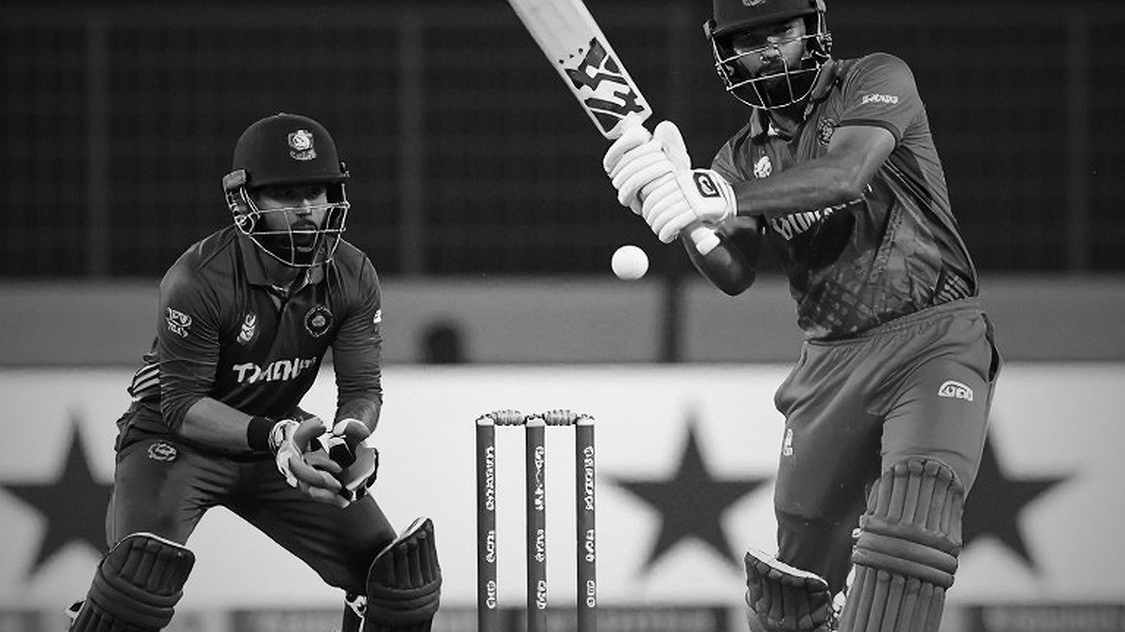
Which brings the contrarian angle nobody lifts. A document's market value is set by how much it says, not how right it is. An empty report is unpublishable, because the reader reads it as failure and the editor reads it as unfinished work. But what this document did is technically the hardest thing on the list: it refused to analyse without a format anchor. The highest-severity error in cricket analysis is cross-format conflation — Test and T20 rankings do not move in the same direction, and a figure carried from one format into the other stops being a fact and becomes decoration. The report avoided that error by declining to write. Calling that a failure is easy. Calling it discipline is harder, and correct.
There is a second inversion buried in the label. "cricket_asia" is a geographic tag, not a commercial one. The weak signal is that the underlying article concerned a team or a match rather than league economics. That inference sits at low confidence and must not enter the record as a finding — the way a source having a phone number is not the same as a source having testimony.
Six signals to track next cycle: successful source retrieval; an information-point count of at least five with one quantified datum; the presence of a format anchor; entities resolved into real names; a time-sensitivity grade; and most importantly, any sentence in any field that reads like an instruction. Those six cells are the annex I trust ahead of the announcement.
The next domino is not the story. It is the retrieval log — the raw HTML, the publication timestamp, the request that failed quietly and became N/A. Until it returns, this document should be filed in the record as "nothing arrived," not "nothing happened." One word apart, a whole conclusion of difference.
And when the source does return, the question will be whose name sits on the first line of the correction — the analyst who refused to fill a blank cell, or the editor who sent it back for being incomplete?